Perimenopause: what it is, why it changes everything, and how to train for it
Perimenopause is the 4–10 year transition into menopause: shifting hormones, joint changes, sleep disruption, bone and muscle loss. What the research says about training through it.
Last updated
The short answer
What is perimenopause and how should I exercise through it? Perimenopause is the multi-year transition before menopause when estrogen, progesterone, and testosterone decline non-linearly. The body that worked at 35 doesn't respond the same way at 47 — bone density falls, muscle mass falls, cortisol sensitivity changes, recovery slows. The exercise protocol that protects you through this is the opposite of the one most fitness apps push: heavier weights, fewer reps, shorter sessions, two to three days a week. Long high-intensity cardio raises cortisol and undermines the adaptations you actually need.
Source: NIH 2023 meta-analysis, NIH 2023
What is perimenopause, exactly?
Perimenopause is the multi-year transition into menopause. It typically begins between ages 40 and 47 and lasts 4 to 10 years. It ends when a woman has gone 12 consecutive months without a menstrual period — at which point she is by definition in menopause.
The hormonal picture during this window is volatile. Estrogen does not decline in a smooth line; it spikes and drops, sometimes within the same cycle. Progesterone, the hormone that calms the nervous system and supports sleep, declines first and most steeply. Testosterone, often forgotten in the conversation, also drops by 50% between ages 25 and 50 in women.
Symptoms come from the volatility as much as the absolute levels. The hot flashes, sleep disruption, anxiety spikes, joint stiffness, midsection weight changes, and brain fog that women experience are downstream of a system that's been calibrated for 30 years to one hormonal baseline and is now operating without it.
How does perimenopause change the body's response to exercise?
Three changes matter most for training:
Bone density falls. Estrogen is protective for bone tissue. As estrogen declines, the rate of bone resorption outpaces the rate of bone formation. The 1–3% per year loss isn't speculative — it shows up in DEXA scans within 18 months of menopause for most women. Resistance training (and impact loading) is the only consistently effective non-pharmacologic intervention to reverse it.
Muscle mass falls (sarcopenia). Skeletal muscle starts declining slowly around age 30, then accelerates to 3–5% per decade after 40. The mechanism is partly hormonal (declining anabolic signals), partly behavioral (most adults stop the kind of mechanical loading that drives muscle protein synthesis). The intervention is the same: lift moderate-to-heavy weight, eat enough protein, sleep.
Cortisol response shifts. Perimenopausal women show flattened cortisol curves and elevated evening cortisol. The implication is counterintuitive: high-volume cardio — long runs, 75-minute spin classes — worsens this pattern, suppresses recovery, and over time blunts the muscle and bone adaptations you're working for. Moderate resistance training does not have this effect.
What exercise protocol actually works in perimenopause?
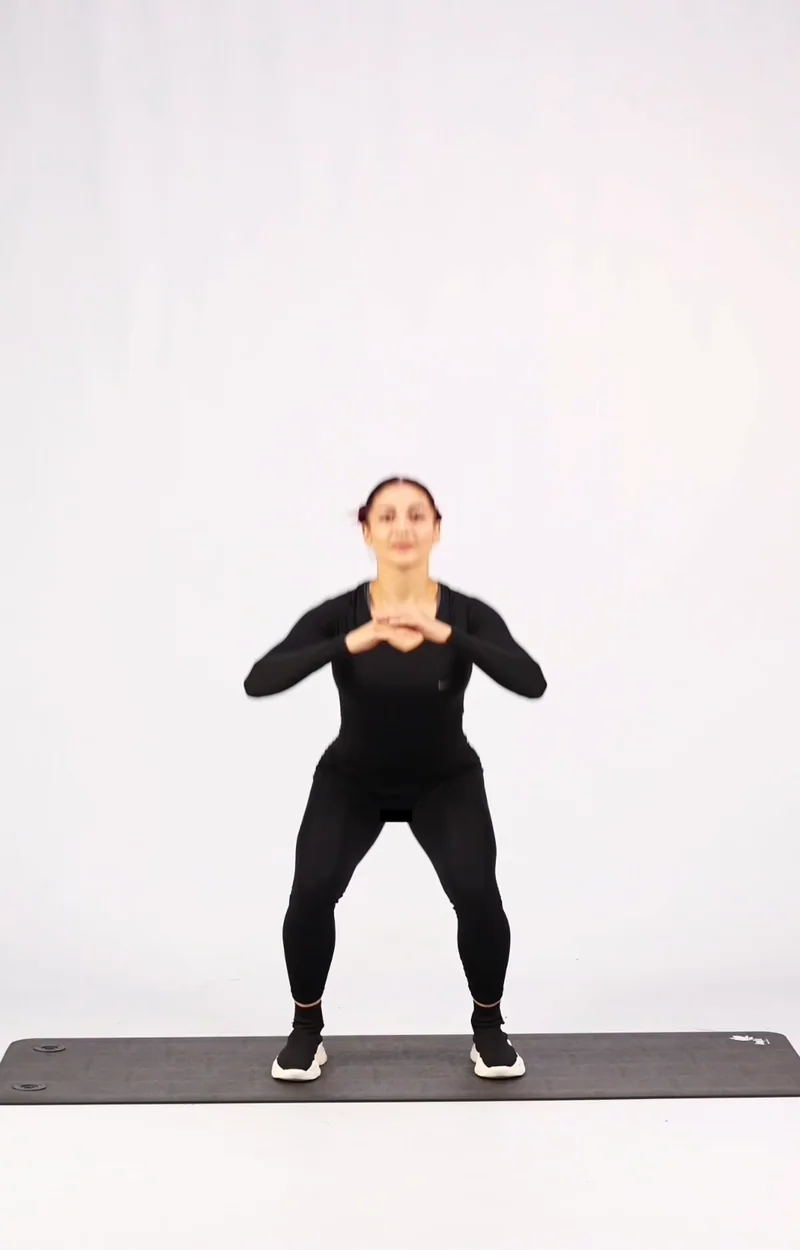
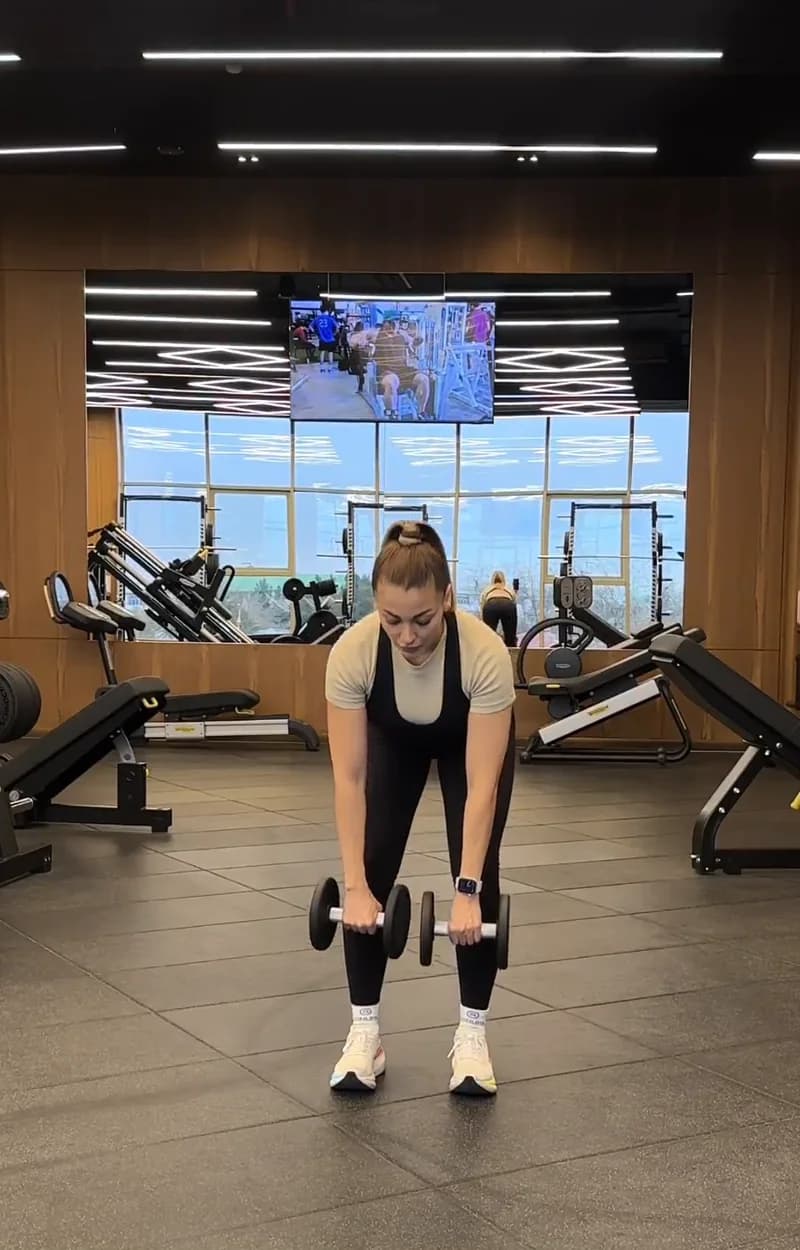
Two to three strength sessions per week is the minimum effective dose. Compound lifts — squat, hinge, push, pull — covering the major movement patterns. Sessions of 30–45 minutes. Moderate to heavy load (70–85% of your one-rep max), 6–10 reps per set, the last 2 reps genuinely difficult.
Daily walking as the baseline cardiovascular intervention. 30–60 minutes outside if possible. Walking does not raise cortisol the way moderate-to-vigorous cardio does and provides consistent low-grade muscle activation and skeletal loading.
One optional play session — pickleball, hiking, tennis, dance, swimming. Treat it as recovery and joy, not as the main training stimulus.
Notably absent from this list: 60-minute HIIT classes, long-distance running, daily 75-minute spin. None of these are wrong in isolation, but they are wrong as the *primary* exercise for a perimenopausal body. They tax the cortisol system the very moment the cortisol system has lost its main regulator.
Why is form so much more important now?
Declining estrogen increases ligamentous laxity. Joints are looser, stabilizers are weaker, and the structural margin for technical error is smaller than it was a decade ago. A 25-year-old gets away with rounded-back deadlifts for years; a 47-year-old often does not.
This is not a reason to avoid lifting — it's a reason to commit to clean technique. The form check is the cheapest, fastest way to know whether your knees, hips, and spine are doing what they should under load. A 60-second AI form check on each major lift, repeated every 2 weeks, catches the small drifts before they become injuries.
What about supplements, hormones, and the rest?
Protein is the foundation: 1.2–1.6 g per kg of body weight daily, spread across 3–4 feedings. Below that and you're working hard for half the result.
Vitamin D, magnesium, and creatine each have moderate-to-strong evidence in this demographic; calcium from food (not supplements) is preferred.
Menopause hormone therapy (MHT, formerly HRT) is increasingly endorsed by NAMS as first-line for symptomatic women in or near menopause, with a different risk-benefit profile than the Women's Health Initiative findings of the early 2000s suggested. Talk to a NAMS-certified menopause practitioner — not your generic GP — for personalized advice.
Key takeaways
- Perimenopause is the 4–10 year hormonal transition before menopause, typically starting in the early 40s.
- The right exercise program in perimenopause is the opposite of what most apps push: heavier weights, shorter sessions, less cardio.
- Bone and muscle loss are real and reversible — but only with progressive, loaded resistance training, not walking alone.
- Form matters more than load. Joint laxity makes technical errors more costly than at 25.
- Talk to a NAMS-certified clinician about MHT. The science has moved past the 2002 WHI scare.
Frequently asked
Most women enter perimenopause between ages 40 and 47, though some begin in their late 30s. The marker is irregular cycles plus the beginning of symptoms like sleep disruption, mood shifts, and changes in body composition. A single elevated FSH blood test does not confirm perimenopause — it's a clinical, symptom-based diagnosis.
Typically 4 to 10 years. The average is about 7 years. You enter menopause once you have gone 12 consecutive months without a menstrual period.
No — and the data on starting in your 50s, 60s, and even 70s is overwhelmingly positive. Bone density and muscle mass both respond to mechanical load at every age studied. The earlier you start the more you preserve, but starting late still wins versus not starting.
No. A pair of adjustable dumbbells, a sturdy bench or chair, and 30 minutes of floor space covers 90% of what a perimenopausal woman needs to train hard. The KinesteX form check works the same way at home as in a gym — your phone camera doesn't care what's behind you.
Done well, lifting is one of the most reliable joint-pain interventions in this demographic. Strength is what stabilizes joints. Done with poor form, lifting can absolutely make things worse — which is why the form check exists and why we'd rather see you skip a session than grind through it with bad mechanics.