Strength training: what it is, why it works, and how to do it after 40
Strength training makes muscles produce more force. For women 40+, it's the most evidence-backed intervention for bone density, muscle, metabolism, and longevity.
Last updated
The short answer
What is strength training and why does it matter at 40+? Strength training is exercise designed to make your muscles produce more force, typically by lifting weights against gravity. For women 40+, it is the single most evidence-backed exercise intervention — protecting bone density, preserving muscle mass, improving insulin sensitivity, and extending healthy years. Two to three sessions per week of compound movements (squat, hinge, push, pull) at moderate-to-heavy loads is the protocol with the strongest support.
Source: NIH 2023 meta-analysis, NIH 2023
What is strength training, exactly?
Strength training is any exercise where your muscles work against an external resistance — a barbell, dumbbell, kettlebell, resistance band, or your own body weight — with the goal of increasing force production. The mechanism is mechanical: muscle fibers experience load, the body responds by recruiting more fibers and building more contractile tissue.
It is distinct from endurance training (cardio), flexibility training (stretching), and skill training (sports). Each has its place; only one of the four reliably builds new muscle mass and bone density.
What are the patterns?
The body has four fundamental movement patterns, and a complete program trains all of them:
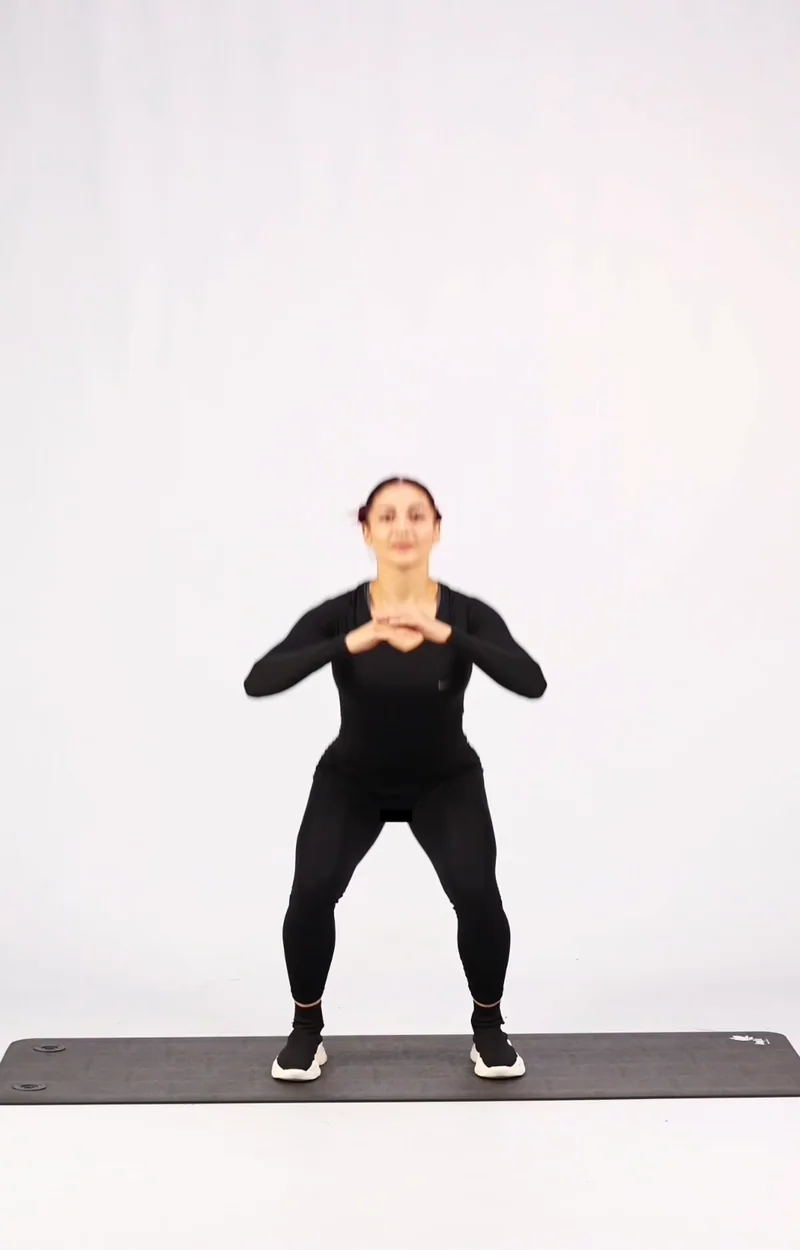
Squat — knees and hips bend together. Trains glutes, quads, hip mobility.
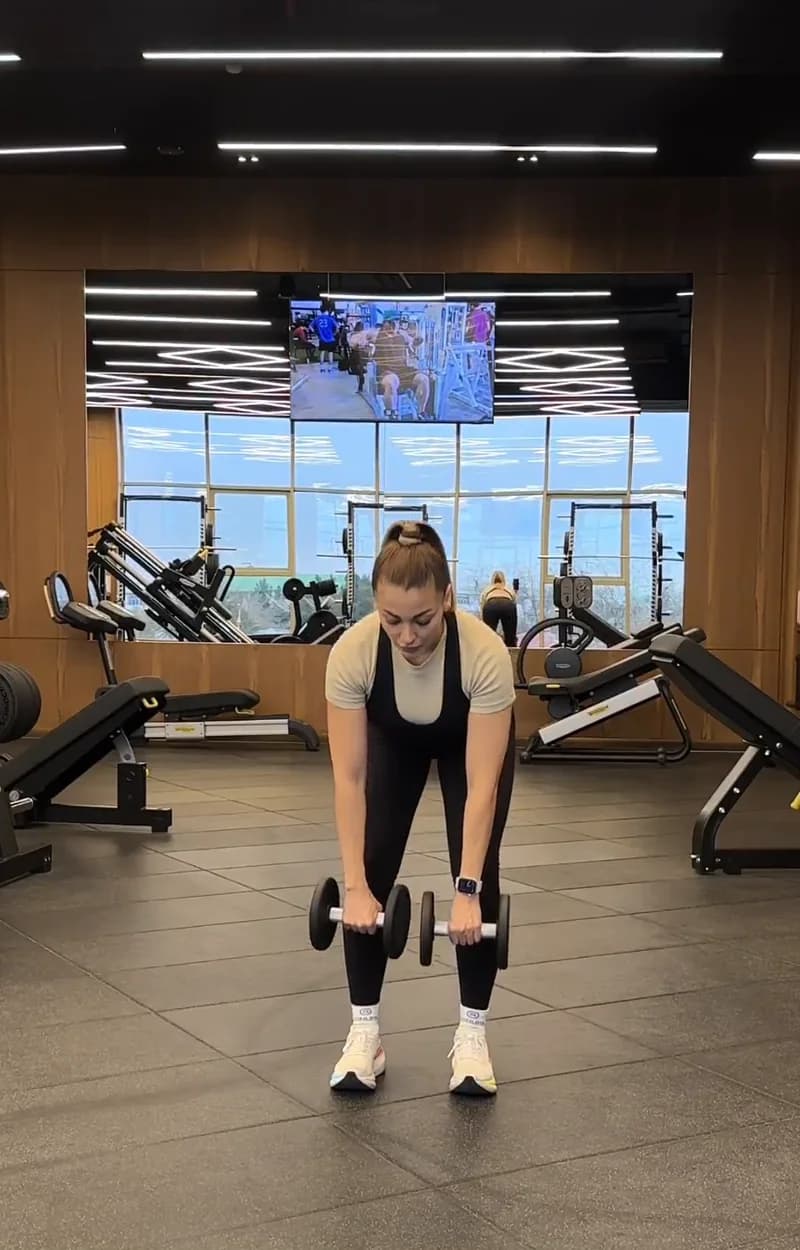
Hip hinge — hips fold backward, knees stay mostly stable. Trains hamstrings, glutes, lower back. Romanian deadlift is the textbook example.
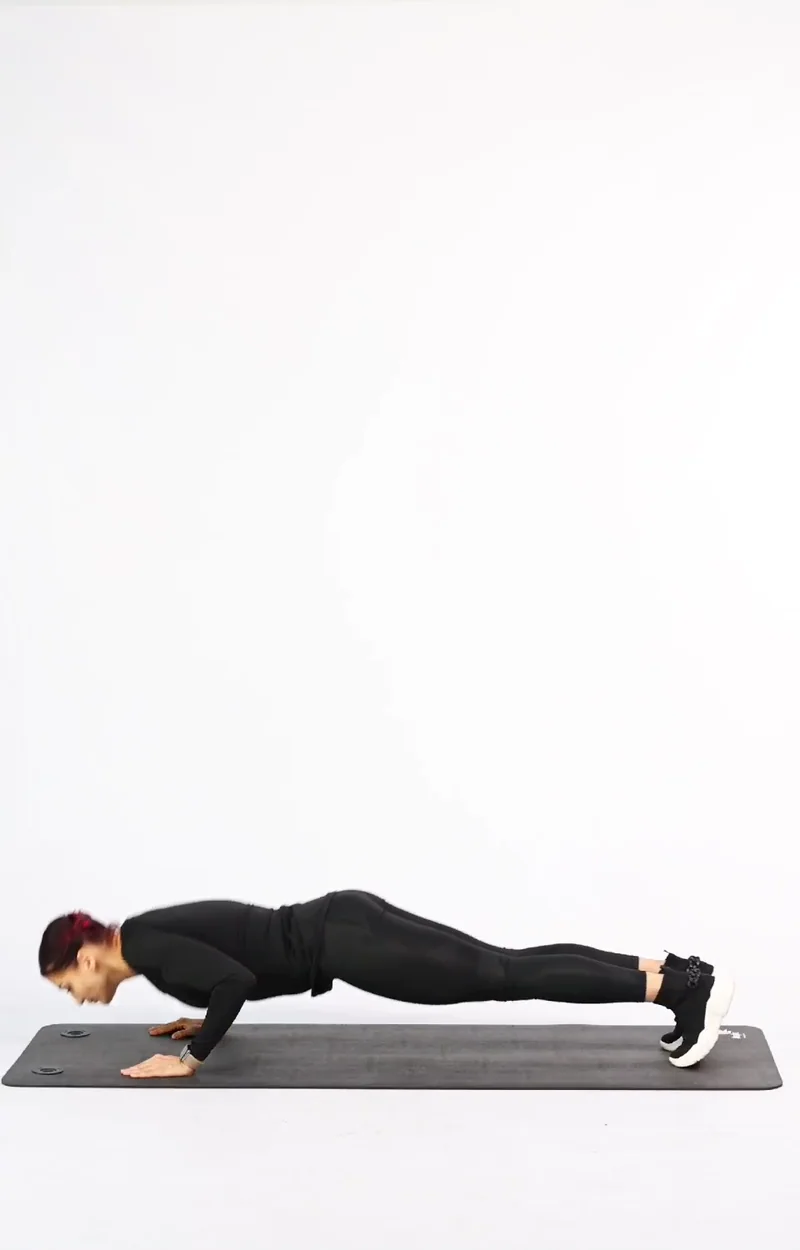
Push — pushup, overhead press, bench press. Trains chest, shoulders, triceps.
Pull — row, lat pulldown, pull-up. Trains back, biceps, rear delts.
Two workouts a week that hit all four patterns is a complete program for the perimenopausal body. Anything more is bonus.
How heavy is heavy enough?
The standard prescription: 70–85% of your one-rep max, performed for 6–10 reps per set, with the last 2 reps genuinely difficult. If you can do 20 reps comfortably, it is too light.
For someone new to lifting, "heavy" can mean a pair of 10-pound dumbbells. For an experienced lifter, it can mean a barbell holding 200 pounds. The number is irrelevant; the perceived effort is the variable.
Key takeaways
- Strength training is the highest-leverage exercise intervention for women 40+.
- Train all four patterns (squat, hinge, push, pull) twice a week.
- Use moderate-to-heavy load — the last 2 reps of a set should be hard.
- Form matters more than load. Master technique before adding weight.
Frequently asked
CrossFit blends strength training, conditioning, and skill work at high intensity. Some of its movements (squats, deadlifts) overlap with strength training. The difference is intensity and pacing — pure strength training emphasizes full recovery between sets, while CrossFit often does not.
For learning the patterns, yes — once. For ongoing execution, no, especially with AI form check. Three to five in-person sessions with a credentialed strength coach (CSCS, NASM-PES) early on dramatically reduces injury risk.